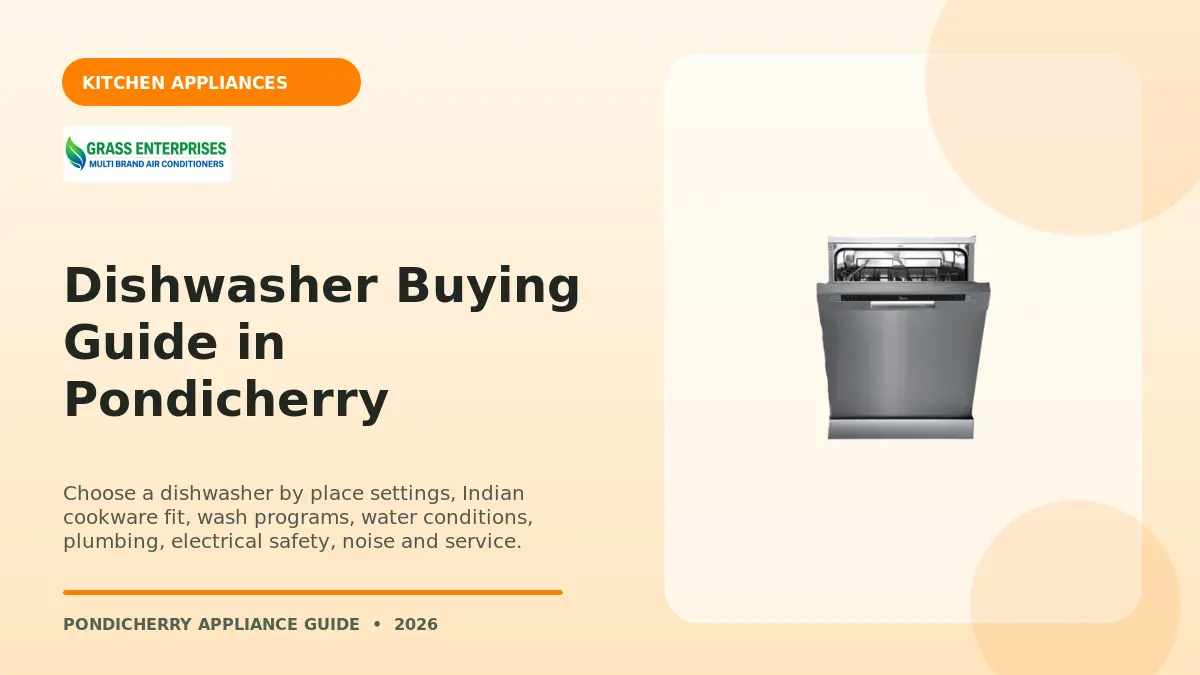

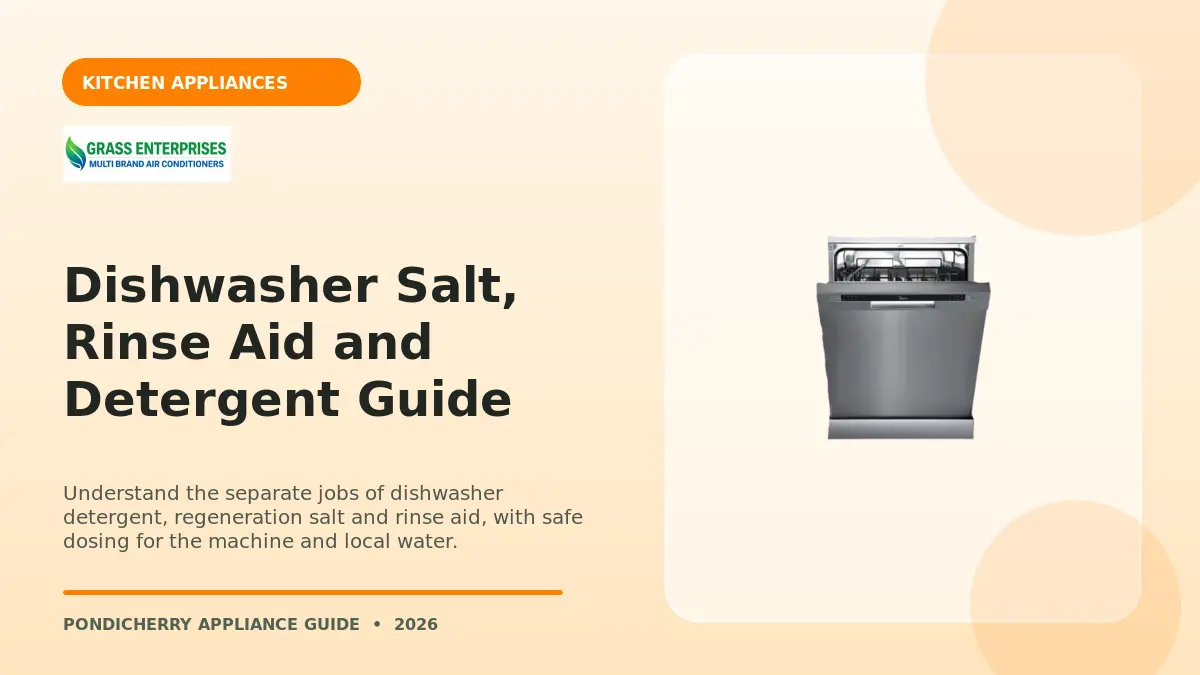
Understand the separate jobs of dishwasher detergent, regeneration salt and rinse aid, with safe dosing for the machine and local water.
Quick answer
Automatic dishwasher detergent removes food soil, dishwasher salt regenerates the built-in water softener on models that have one, and rinse aid helps water sheet from dishes for drying. They are not interchangeable. Fill only the labelled compartments, set hardness from a measured value and follow both appliance and product instructions.
Decision summary
What to check first
Keep the three functions separate
Detergent works during the wash, while salt supports ion-exchange softening and rinse aid is released near the final rinse. Combination tablets may include multiple agents, but the dishwasher may still need separate salt or rinse-aid settings depending on water hardness and manual guidance. Read the package and model instructions rather than assuming an all-in-one label covers every local condition.
Set hardness using evidence
Hard-water scale can mark glassware and reduce performance, while incorrect settings waste salt. Use a suitable test or local supply information, then enter the hardness level exactly as the manual maps it. Fill the salt reservoir carefully, wipe spilled crystals and run the instructed cycle so salt water does not remain on stainless surfaces.
Diagnose spots and residue systematically
White film can result from mineral scale, excess product, poor rinsing or inappropriate items; cloudy glass may have another cause. Review spray-arm movement, filter cleanliness, loading, program, water temperature and dose one variable at a time. Foam or leakage after the wrong product should be handled according to the manual and service advice, not neutralised with another chemical.
Side-by-side
Dishwasher Salt, Rinse Aid and Detergent Guide comparison
| Product | Main job | Do not substitute with |
|---|---|---|
| Detergent | Clean food soil | Hand-wash liquid |
| Dishwasher salt | Regenerate softener | Table salt |
| Rinse aid | Improve sheeting and drying | Household vinegar unless approved |
Ranges are starting points. Confirm the current specification, energy label and installation requirements of the exact model before purchase.
Safe care checklist
Complete these checks safely
- Start with the manual: confirm which parts and maintenance steps are intended for the user.
- Isolate safely: switch off electricity, water or other supplies exactly as the product instructions require.
- Change one thing at a time: record the symptom, setting and result so a recurring fault is easier to diagnose.
- Protect the warranty: do not open sealed panels or use unapproved chemicals, parts or repair methods.
- Escalate warning signs: stop for smoke, burning smell, leakage near electricity, repeated trips or unsafe movement.
Local appliance support
How Grass Enterprises helps Pondicherry buyers
Grass Enterprises helps households and businesses compare home appliances and electronics by space, capacity, features and budget. Visit or contact the Mudaliarpet team to discuss currently available products, delivery, installation guidance and after-sales assistance.
Grass Enterprises
No. 187, Poincare Street, TM Nagar, Keerapalayam, Mudaliarpet, Puducherry – 605004
People also ask